Tractor Wheel Slip This Autumn: Could Worn Agricultural Tracks Be Part of the Problem?

Tractor Wheel Slip This Autumn: Could Worn Agricultural Tracks Be Part of the Problem?
It has already been a tough year for agricultural machinery.
After an exceptionally dry summer, many farms have been working in hard ground conditions that have increased wear on machinery and cultivation equipment. Farmers Weekly has highlighted concerns around component wear going into the autumn drilling period, with hard ground putting more strain on working parts.
Now the conditions could go the other way.
The Met Office's September outlook suggests there is an increased chance of a wetter-than-average autumn, particularly as we move further into the season.
For farmers, that can mean going from hard, abrasive ground to softer and wetter soils in a relatively short space of time.
That makes traction and machinery conditions worth keeping a close eye on.
If a tracked tractor, combine or other machine suddenly isn't pulling as well as it used to, worn tracks could be part of the problem.
So how much slip is normal, what causes excessive slip and when should you start looking more closely at the condition of your tracks?
What is tractor wheel slip?
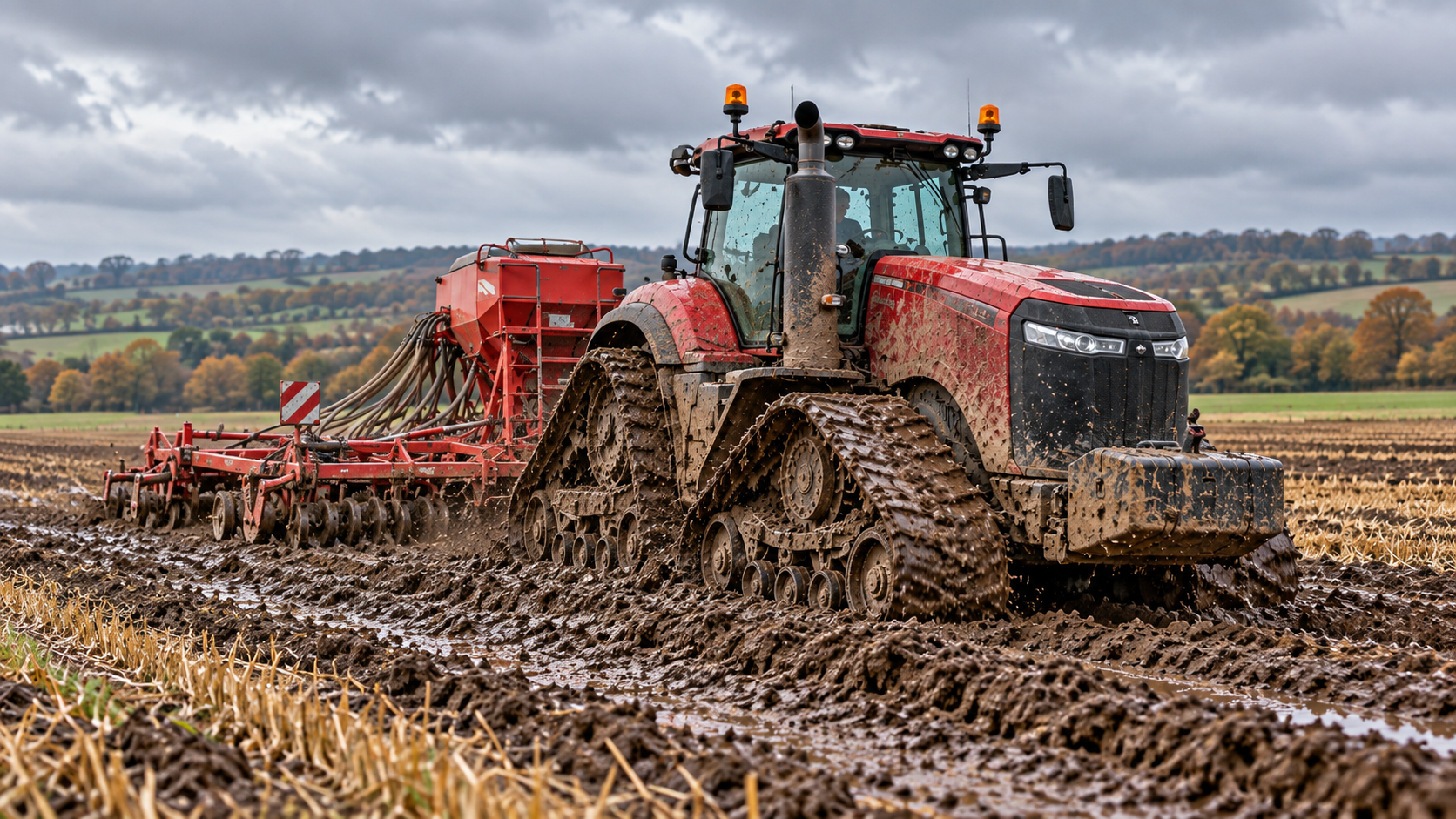
Wheel slip happens when the driven wheels are turning faster than the distance the tractor is actually travelling.
Some slip is perfectly normal when a tractor is working under load. You need a certain amount to transfer power through the tyres and into the ground.
Too much slip is where problems start.
Instead of that power moving the tractor and implement forwards, more of it is being lost through wheel spin. That can affect fuel use, work rates and how much ground you can cover.
On wheeled tractors, things such as tyre pressure, ballast and tyre condition can all affect slip. For tracked machinery, the condition of the tracks, track tension and undercarriage also need to be considered.
WHY COULD TRACTION BECOME MORE OF AN ISSUE THIS AUTUMN?
Agricultural machines often sit outside for long periods, and exposure to stones in the field, sunlight, frost and chemicals can cause rubber tracks to crack over time.
Following the dry summer, rain is needed in many areas to restore soil moisture. The concern is that prolonged or heavy rainfall could then make cultivation and drilling more difficult.
Farmers Weekly has already reported on the risk of a wet autumn following the dry summer, while AHDB advises that heavy machinery travelling over wet soils can increase the risk of compaction.
For tracked machinery, changing conditions can also expose wear that was less obvious during the summer.
A machine that still seemed to perform reasonably well on hard, dry ground may start struggling once conditions become softer and more demanding.
If traction has dropped noticeably compared with previous seasons, it is worth checking the tracks rather than simply putting it down to the weather.
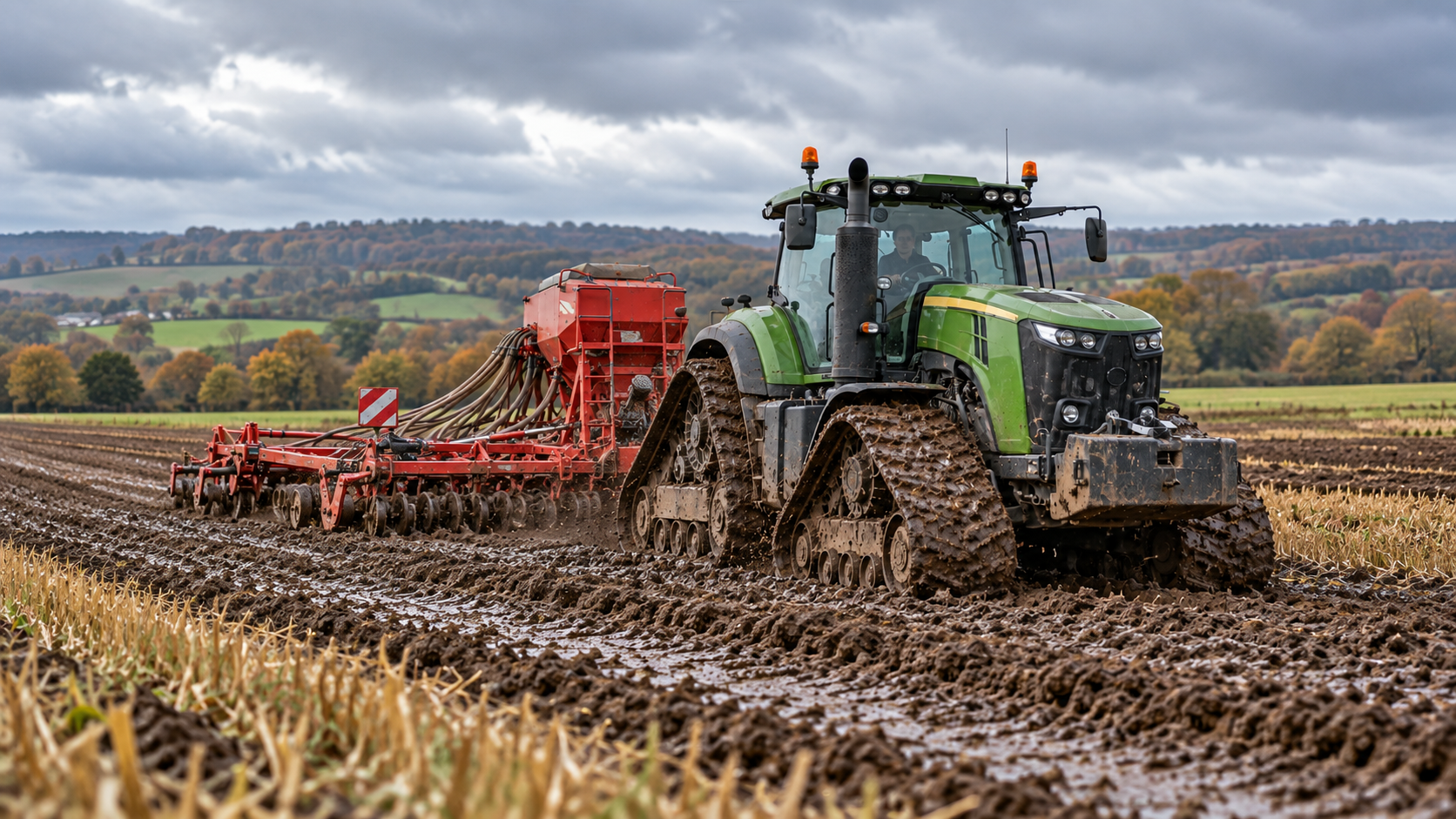
WHAT CAUSES EXCESSIVE WHEEL OR TRACK SLIP?
There isn't always one obvious cause.
Often it is a combination of the ground, machine setup, implement and the condition of the tyres or tracks.
Wet or loose ground
Wet, loose or recently cultivated soil naturally makes it harder for machinery to find grip.
The surface can move underneath the tractor rather than giving the tyre or track something firm to work against.
Once the machine begins to slip, it can disturb the surface even further and make traction worse.
Working depth and implement load
Heavy cultivation and drilling equipment can put a lot of load through a tractor.
Working deeper or travelling faster increases the amount of power needed to pull the implement.
If the ground has changed or the implement is working harder than usual, slip can rise quite quickly.
Sometimes a relatively small adjustment to working depth or forward speed can make a noticeable difference.
Tyre pressure and ballast
For wheeled tractors, tyre pressure and ballast are two of the first things worth checking.
Too much tyre pressure can reduce the contact area with the soil, while incorrect ballast can make it harder for the tractor to put its power down efficiently.
Adding more weight isn't automatically the answer either. Carrying unnecessary ballast increases the weight travelling across the field and can contribute to soil compaction.
Worn tyres
As tyres wear, there is naturally less tread available to grip the ground.
That might not cause an obvious problem in good conditions, but it can become much more noticeable in wet or loose soil.
Worn agricultural tracks
The same applies to tracked machinery.
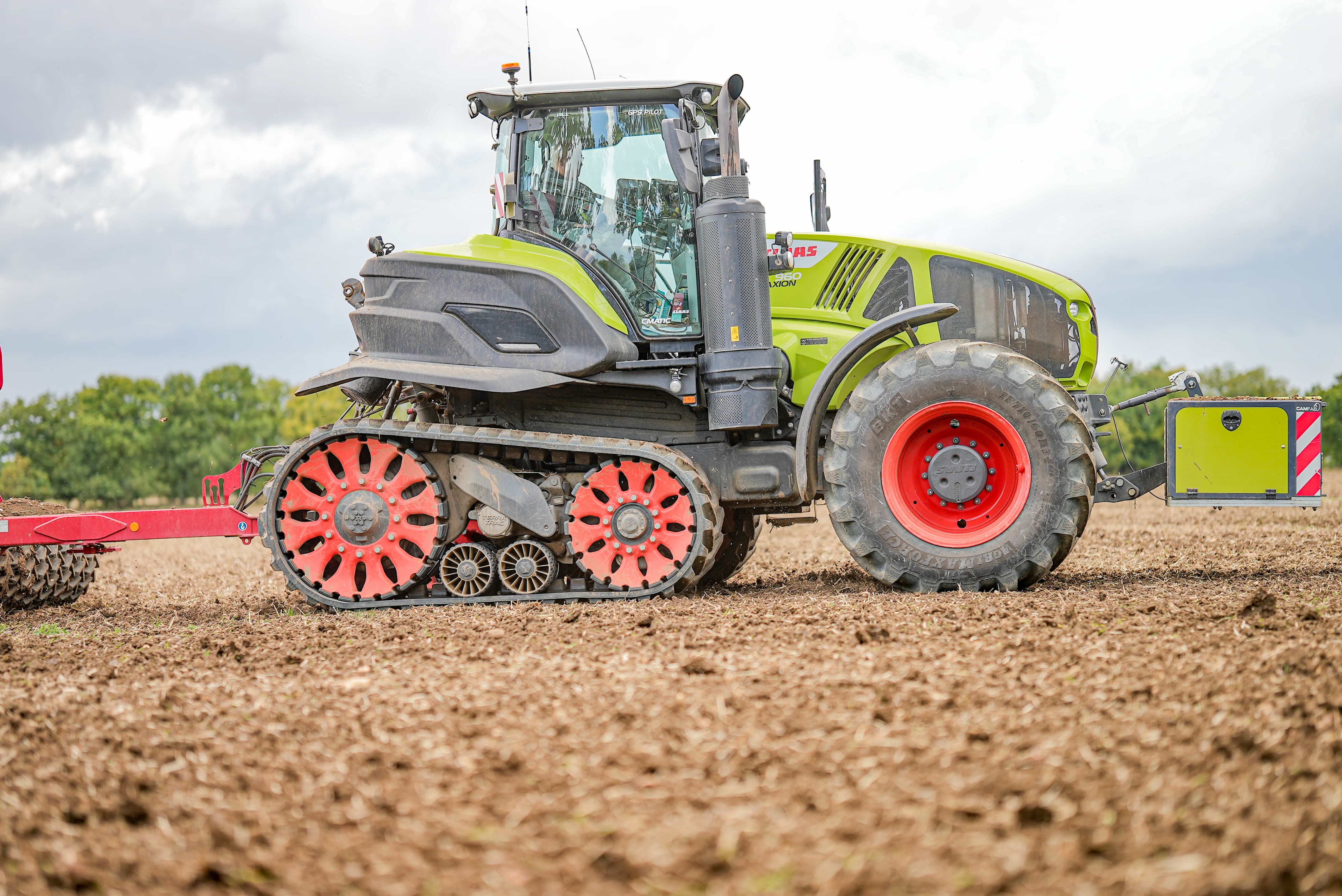
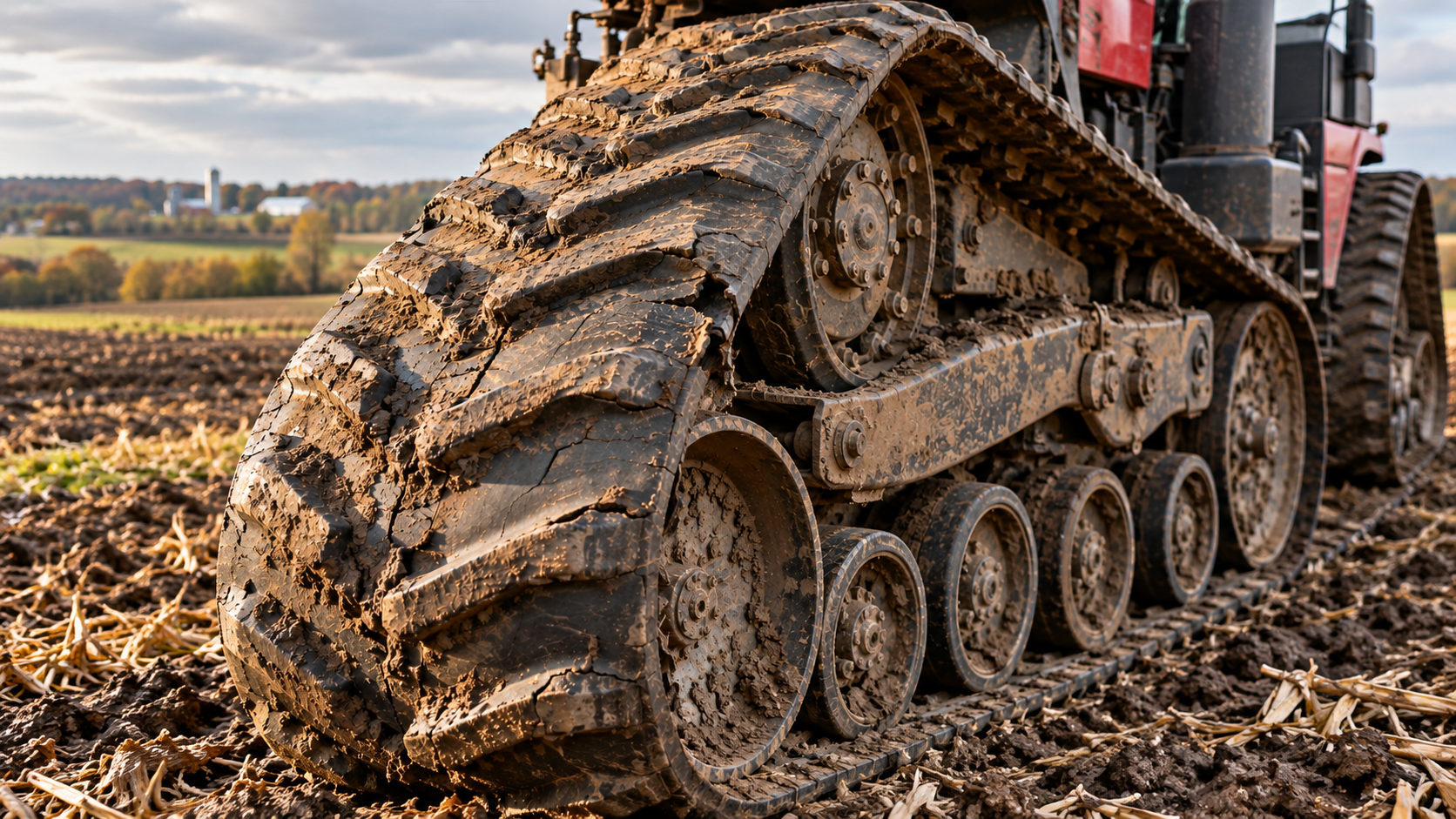
As rubber tracks wear, the tread gradually becomes shallower and the amount of usable grip reduces.
If a machine is starting to slip more than it used to when doing the same work, the condition of the tracks should be one of the things you check.
CAN WORN AGRICULTURAL TRACKS CAUSE LOSS OF TRACTION?
Yes.
The tread on an agricultural rubber track is there to help transfer the machine's power into the ground.
As that tread wears down, traction can gradually reduce.
It is often something that becomes more noticeable when conditions get difficult. A worn track might perform reasonably well on firm ground but struggle much more once the machine is pulling heavily in wet or cultivated soil.
Outland's existing guidance on replacing agricultural tracks highlights loss of grip, increased track slip and reduced pulling performance as signs that tracks may be wearing out.
That doesn't automatically mean a new track is needed every time traction drops.
Track tension, the undercarriage and general machine setup should all be checked as well.
But if the tracks are visibly worn and performance has been getting worse, replacement may need to be considered.
WHAT SHOULD YOU CHECK ON YOUR TRACKS BEFORE AUTUMN DRILLING?
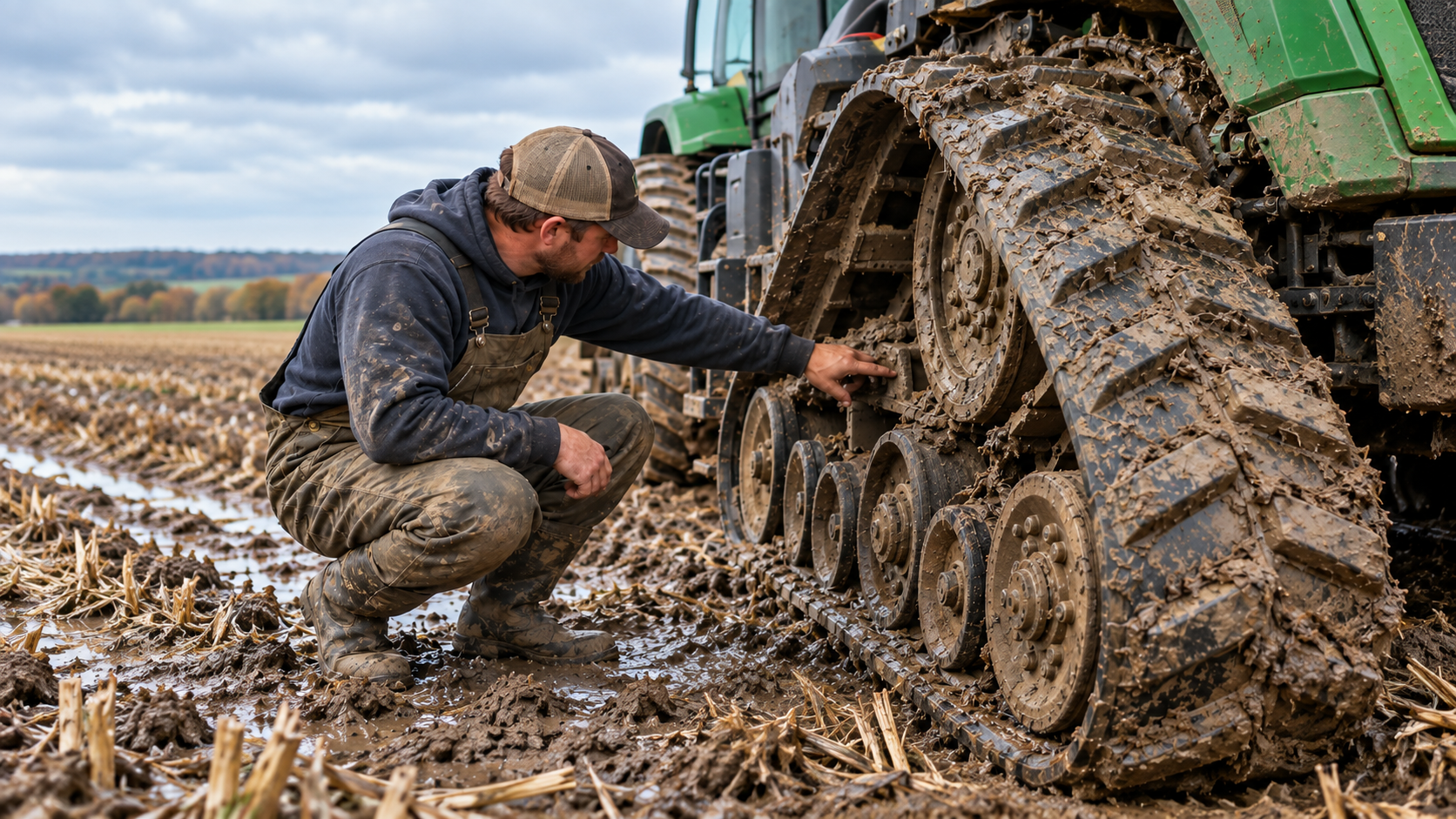
You don't need to wait until a track fails before inspecting it.
A quick check before the machine goes into a busy cultivation or drilling period can highlight problems early.
Check the tread
Look across the full width of the track.
If the tread is noticeably worn down, traction may already have started to suffer.
Also look for uneven wear. If one side is wearing much faster than another, there could be an issue with alignment, tension or the undercarriage.
Look for cracking or splitting
Small surface marks don't necessarily mean a track needs replacing straight away.
Deeper cracks, splits or sections where the rubber is beginning to break away are more concerning and should be investigated.
Check the guide lugs
Worn or damaged guide lugs can affect how the track runs through the undercarriage.
If the damage becomes serious enough, it can contribute to alignment problems or de-tracking.
Look for exposed internal components
If cords or other internal parts of the track are becoming visible, the track is already showing significant wear.
At that point it is worth getting the track assessed rather than waiting for a failure.
Check the tension
Track tension matters both for performance and track life.
Too loose and the track can move excessively within the system, increasing the chance of de-tracking.
Too tight and you can place unnecessary strain on both the track and the undercarriage.
The correct tension will depend on the machine and track system, so always work to the manufacturer's recommended settings.
Don't forget the undercarriage
If a track is wearing badly, it is important to understand why.
Replacing the rubber track without checking the rest of the system can mean the same problem starts damaging the replacement.
Rollers, idlers, drive components and other undercarriage parts should all be checked for wear or damage.
This is particularly important if the existing track has worn unevenly, has repeatedly de-tracked or has suffered unusual damage.
Recent combine maintenance advice from Farmers Weekly also highlighted the importance of checking track alignment, drive lugs and idlers when maintaining tracked combines.
The aim is to fix the cause, not just replace the part that has worn out.
WHY IT CAN PAY TO PLAN TRACK REPLACEMENT EARLY
The worst time to find out a track is close to failure is when the machine is needed every day.
Autumn cultivation and drilling often have fairly narrow weather windows. Losing a tractor or combine for several days because a track has failed can create a much bigger problem than the cost of the track itself.
There is also more pressure than ever to keep existing machinery working properly.
Farm input costs remain high and Farmers Weekly reported in August that agricultural input inflation was running at 8.6% year on year. New machinery sales have also been affected by tighter farm margins, while demand for good second-hand machinery has remained stronger.
For many farms, maintaining the machinery they already own makes far more sense than replacing it unnecessarily.
The same applies to tracks.
If the machine itself is sound but the tracks are reaching the end of their useful life, replacing them before they fail can keep that machine working for much longer.
WHEN SHOULD AGRICULTURAL TRACKS BE REPLACED?
There isn't a set number of hours that applies to every agricultural track.
How long a track lasts depends on the machine, the work it does, road use, soil conditions and how well the track and undercarriage have been maintained.
It makes more sense to judge the track on its condition.
- significant loss of tread
- increasing slip or reduced traction
- cracks or splits in the rubber
- damaged or missing guide lugs
- exposed internal cords
- repeated de-tracking
- severe uneven wear
- obvious structural damage
If you're seeing several of these at the same time, it is probably worth looking at replacement before the track fails completely.
Frequently Asked Questions
Can worn tracks make a tractor slip more?
Yes. As the tread wears down, the track can lose some of its ability to grip the ground. This tends to become more noticeable in wet or loose conditions or when the machine is working under heavier loads.
Why is my tracked tractor suddenly losing traction?
Ground conditions are often part of the answer, but don't assume they are the only reason. Check the tread, track tension and undercarriage as well. If the tractor used to carry out the same work without struggling, a change in performance is worth investigating.
How do I know if my agricultural tracks need replacing?
Look for significant tread wear, cracking, damaged guide lugs, exposed internal components, repeated de-tracking and any noticeable reduction in traction.
Should I replace tracks before they fail completely?
Where possible, yes. Planning a replacement is usually preferable to dealing with an unexpected failure during drilling, cultivation or harvest.
Can track tension affect traction?
Incorrect tension can affect how the track runs through the undercarriage and may also contribute to premature wear or de-tracking. Always use the recommended tension for the machine and track system.
Should I check the undercarriage when fitting replacement tracks?
Yes. It makes sense to inspect rollers, idlers, drive components and other parts of the undercarriage before fitting new tracks. If something else caused the old track to wear unevenly, you don't want the same thing happening to the replacement.
Need Help Choosing Replacement Agricultural Tracks?
If worn tracks, reduced traction or repeated slipping are starting to affect performance, it may be time to look at replacement options.
Outland Tracks supplies replacement agricultural tracks for tractors, combines, harvesters and other tracked machinery, with options available across a wide range of makes and models.
If you’re unsure which track you need, the Outland team can help you identify the right replacement based on your machine and setup.
Related posts

Replacement Tracks for John Deere 8RX